Entry Point: India's Solar Rulebook, in Three Lists
Approved List of Models and Manufacturers (ALMM)
What it is
Approved list of Models and Manufacturers(ALMM) is a policy/regulatory framework by the Ministry of New and Renewable Energy which basically determines which solar photovoltaic (PV) modules, cells, and wind turbines qualify for use in government-backed and regulated projects across India, it is supposed to assure that panels installed on rooftops and across utility-scale fields match their specifications, originate from the factories that claim to have produced them, and possess the durability to endure a 25-year operational life (the framework is designed to verify manufacturers and prevent misrepresentation of production sources). The biggest part is produced by ‘whom’, the focus of this policy is to boost solar manufacturing in India by making sure that Indian manufacturer’s products are used in projects in India.
List-I and List-II
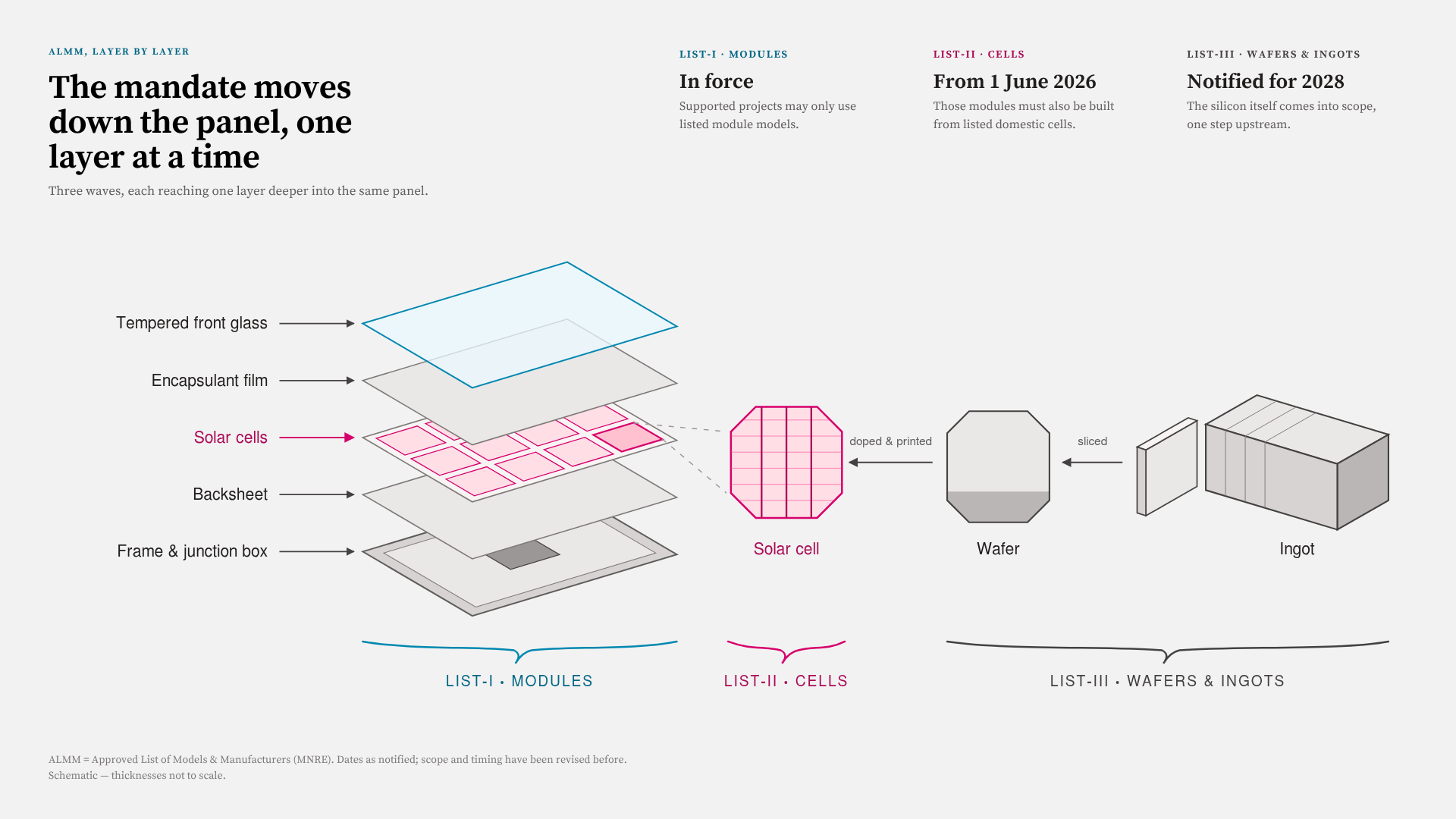
The ALMM order of 2019 established two primary lists, List-1 for Solar PV(photovoltaic) modules, which basically means modules that are assembled in India, and List-2 for Solar PV cells. The framework constructs a traceable chain from production line to project site by mandating manufacturers to register on a model-by-model, factory-by-factory basis and submit to audits and type testing. The definition of government and government related projects encompasses, government-assisted, government scheme backed and government programme projects, on central, state and autonomous level.
List 1- Solar modules
List-2- Solar cells
List 3- Wafers and ingots
How far the mandate reaches
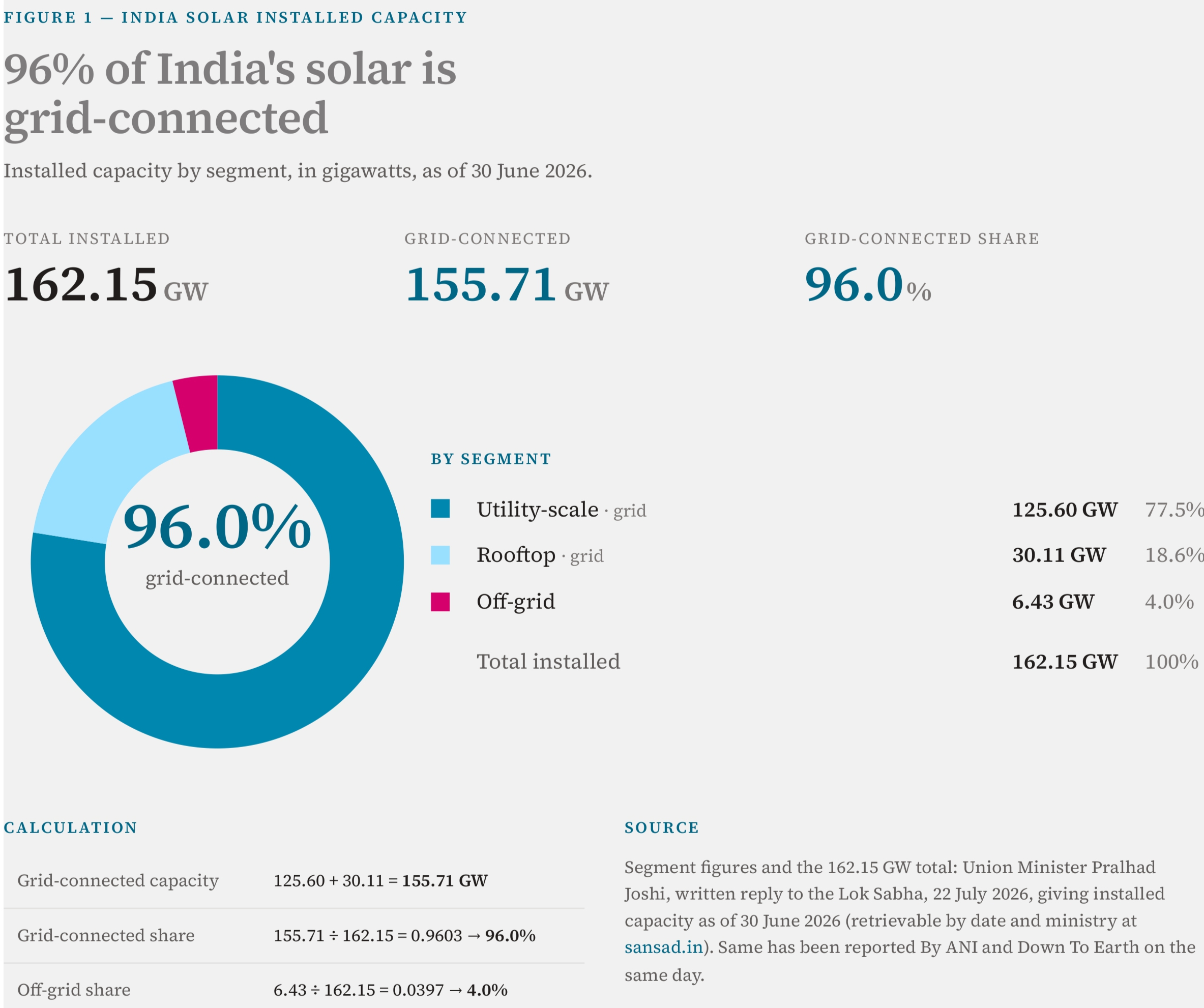
The thing is though, that this list is basically applicable to almost all solar projects in India, as long a project uses the power grid, it explicitly has to follow the ALMM mandate. Roughly 96% of all solar projects in India use grid connectivity, by design. There are also off grid(behind the meter) projects by government entities and PSEs which are supposed to follow the ALMM as well, so the actual number of projects having to follow the ALMM mandate is even more.
Exemptions
The ALMM-I mandate has no exemptions or exceptions, the recent ALMM-2 list has exempts net metering and open access projects till 31 december 2026, Residential consumers under PM Surya Ghar Yojna specifically remain exempt from List-II until 31 March 2027, provided they apply through the national portal.
With List-II now in force, module manufacturing capacity in India sits at roughly 172GW while cell manufacturing capacity is only around 31GW1, a mismatch that shows up the moment the mandate actually gets enforced. When I cross checked this against MNRE’s own government records, the gap was even wider than industry reports. The full numbers, and what they mean for India’s solar industry, will be published in the next blog on the solar cell manufacturing gap.
List-III: wafers and ingots
On 18th March 2026 MNRE(Ministry of New Renewable Energy) announced the ALMM Order to bring silicon wafers into the framework through a new List-III, with compliance required from 1 June 2028, completing a three-tier chain in which module makers retain List-I status only if the cells and wafers inside those modules are themselves enlisted, and non-compliance at any tier risks de-listing. Unlike List-II, though, List-III is conditional rather than dated. MNRE will publish it only once at least three independently operated wafer units exist, with no common ownership or control between them and a combined annual capacity of at least 15 GW. Eligible manufacturers must also hold matching ingot capacity, so standalone slicing units that import ingots and finish locally are explicitly excluded.
The thing about List 3 to keep in mind though is that as of now there are virtually no producers to match the conditions for ALMM-3, under its condition only Adani solar produces 2GW of wafers and ingots, all of which is consumed internally, so India virtually only has 2GW worth of capacity to independently produce Wafers and Ingots.
More detailed insights on the gap in material availability and the current roadmap for production will be shared soon as well ;)
Footnotes
$ subscribe --email
New essays, in your inbox
Subscribe to get insights and a reminder of new blogs every week. No spam, unsubscribe anytime.